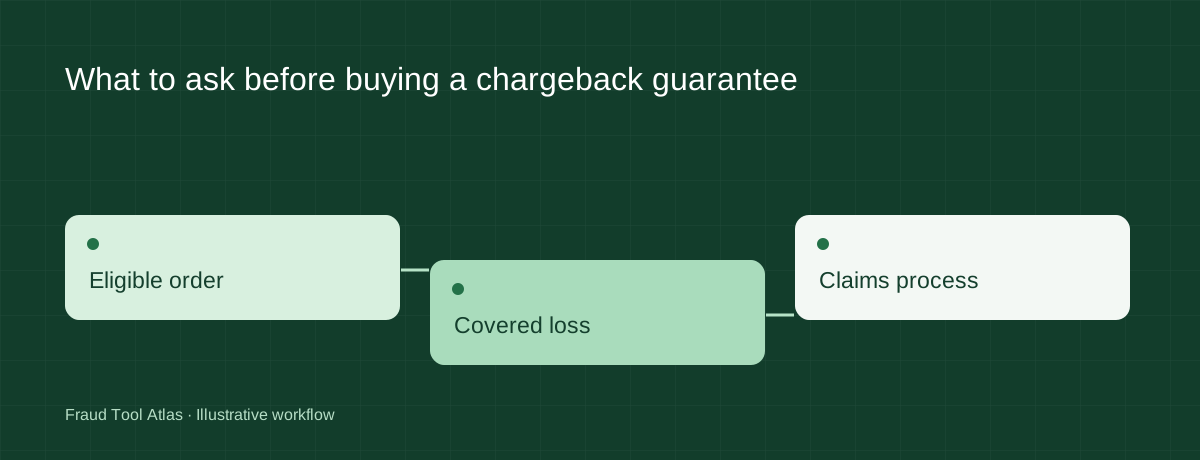
A chargeback guarantee is useful only when the proposed agreement covers the losses and orders that matter to your business. Before comparing the price with a fraud API, identify the eligibility rule, covered reason codes and process for receiving reimbursement.
Start with the covered order
Ask which approval creates eligibility. Confirm what happens if the merchant changes an address, quantity, shipping method or order value after approval. A partial refund or delayed fulfillment may introduce another condition worth resolving before integration.
Request an example showing the full record: provider decision, merchant action, dispute notification, evidence submission and reimbursement, including who supplies each piece of evidence and when the merchant receives the funds.
The proposed agreement defines the coverage.
Distinguish protection types
Fraud-related chargebacks, item-not-received claims and other disputes are not interchangeable. Signifyd’s pricing material describes configurable protection ranging from fraud-only coverage to a broader liability shift. Use that distinction as a prompt to read the actual proposed package.
| Contract question | Evidence to request |
|---|---|
| Which orders qualify? | Eligibility definition and examples |
| Which dispute types qualify? | Covered reason codes and exclusions |
| What costs are reimbursed? | Loss, fee and fulfillment treatment |
| Who files and by when? | Evidence duties and deadlines |
| When is payment received? | Reimbursement process and timing |
| What can invalidate coverage? | Order-edit and operational conditions |
Treat the table as a procurement worksheet. It does not replace the proposed contract or the team responsible for reviewing it.
Compare the operating model
A risk API supplies evidence that an application can use. A decision platform can help run a policy and review queue. A reimbursement arrangement changes eligible loss exposure. Each option still has an integration and operating process.
Estimate fees, engineering, review effort and residual loss on the same order cohort. If a fee is a percentage of approved order value, model it using expected approval and order volume. A per-check subscription needs a different volume calculation. Preserve both units in the comparison.
Inspect the dispute workflow
Ask how the provider receives a dispute notification, which system holds the evidence and who can see its status. Keep customer communications and delivery records accurate and retrievable. A well-organized response process helps explain later outcomes even when a claim is ineligible for reimbursement.
Test an exception as part of the pilot. Use a controlled sample with a changed order or incomplete evidence and ask the provider to explain the expected handling. This exposes operational dependencies that a successful checkout demonstration may not show.
Keep customer outcomes in view
Track legitimate orders accepted and declined alongside eligible losses reimbursed. A guarantee can change incentives, but your business still needs an understandable review and support path for real customers.
The chargeback category and individual tool reviews distinguish prevention, dispute operations and financial protection so your shortlist reflects the job you need done.
Sources and further reading
Official product and technical sources reviewed October 21, 2026.
FAQ
Does a guarantee eliminate every fraud-related cost?
Confirm the contract. Covered loss, fees, fulfillment costs, exclusions and the required claims process can differ.
Is a guaranteed approval rate a reimbursement promise?
They are different commitments. Read how each promise is measured and what remedy or payment the agreement provides.